
Every great film starts by showing you where you are. In a wedding film, that's the job of the drone. Wedding drone videography isn't about aerial photos for your album — it's about a few carefully chosen shots that open your story, place it in its landscape and carry the film from one part of the day to the next. Here's how it works, what it adds and the rules that shape it in Australia.
What Is an Establishing Shot?
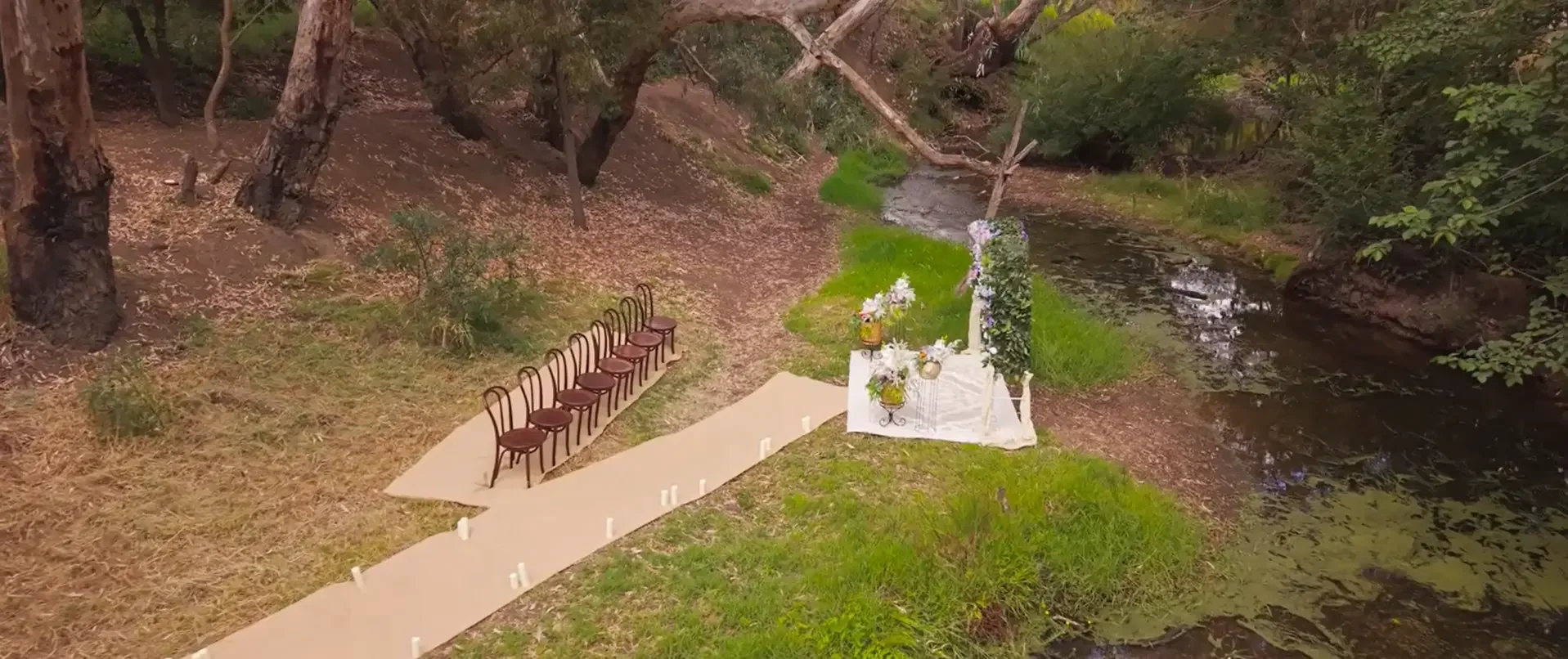
An establishing shot is the wide opening frame that tells the viewer where the story is happening before we meet the people in it. In cinema, it's the city skyline before the apartment scene. In your wedding film, it's the vineyard rolling away behind the ceremony, the coastline beside your reception or the country estate glowing at sunset.
From the air, that context lands in a few seconds. A slow drone move over the venue gives your film a sense of place and scale that ground cameras can't, and it makes the moments that follow — the walk down the aisle, the vows, the first kiss — feel grounded somewhere real.
How Drone Footage Works Inside a Wedding Film
Opening the story
Most often, the drone gives your film its first frames: the venue and the landscape around it, before the story moves in close to you and the people you love.
Moving between chapters
Aerial footage also works as a transition. A short shot of the venue at golden hour can carry the film from the ceremony into the reception, or from the afternoon into the evening, without a hard cut.
Supporting, not leading
The heart of your film will always be faces, voices and real moments captured from the ground. The drone adds context around them — a handful of shots used with intention, not minutes of aerial footage.
Is Wedding Drone Videography Worth It?
When it's a great fit
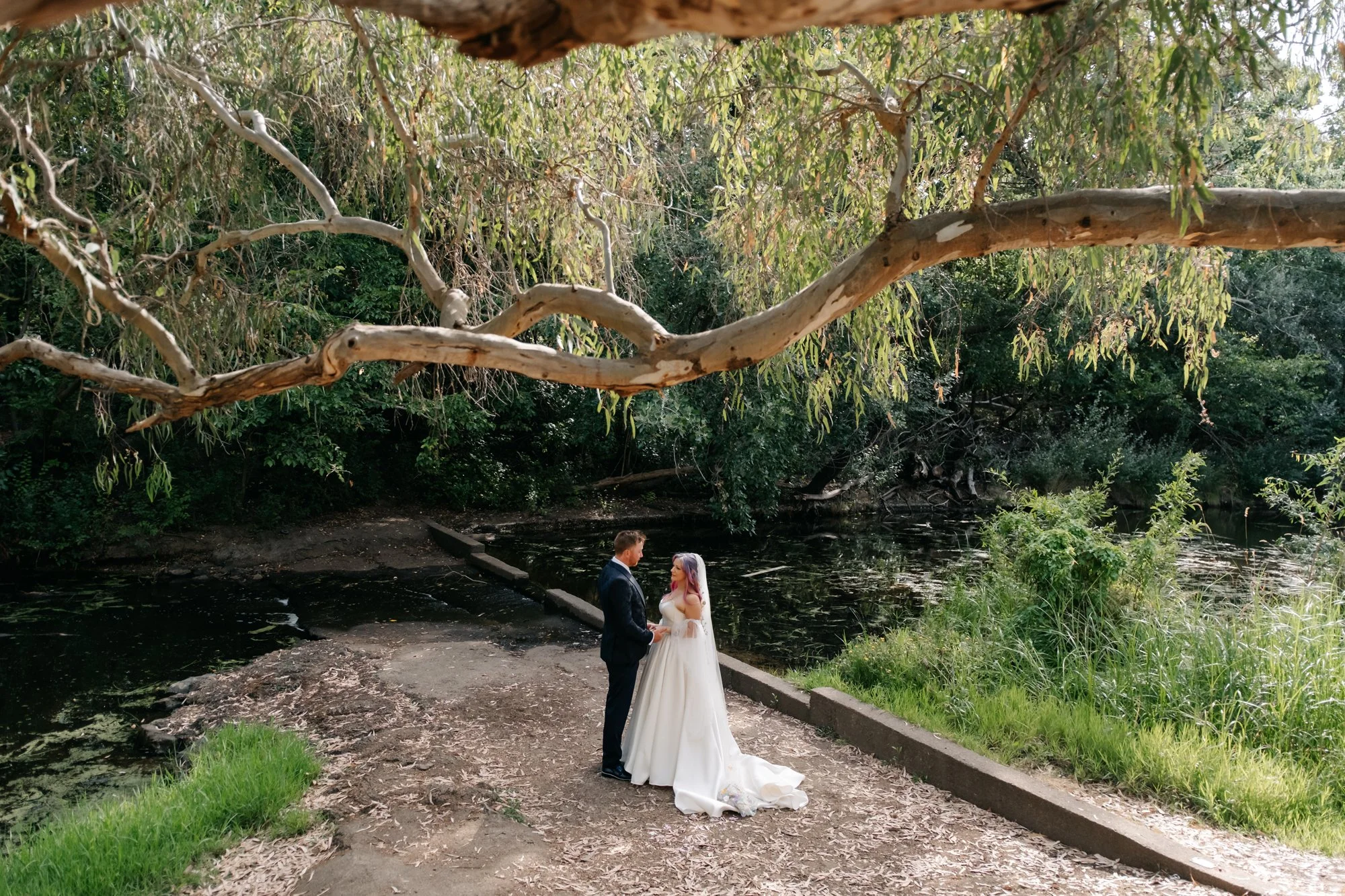
Outdoor ceremonies, vineyards, coastal venues and large rural properties are where an establishing shot does the most — think the Yarra Valley, the Mornington Peninsula, the Barossa or the Adelaide Hills. If the setting is part of why you chose your venue, a drone helps your film remember that.
When it adds less
For an indoor ceremony, a tight city venue or a celebration that happens mostly after dark, there's less landscape to establish. Strong wind or rain can also keep the drone on the ground on the day.
The Rules: What Couples Should Know About Drones in Australia
Flying a drone at a wedding is commercial work, and in Australia it's regulated by the Civil Aviation Safety Authority (CASA). Under the standard operating conditions, drones are flown in daylight, within the pilot's line of sight, below 120 metres, and at least 30 metres away from people who aren't involved in the flight — which also means not flying over your guests. Drones must also stay well clear of controlled airports, and parts of both Melbourne and Adelaide fall inside those restricted zones.
That's one more reason establishing shots suit weddings so well: they're wide, taken from a safe distance and focused on the setting, not hovering above the crowd. When you're comparing videographers, ask:
Do you operate under CASA rules for commercial flights, and are you insured?
Have you checked whether our venue sits near a controlled airport or restricted area?
Does our venue, park or council allow drones, and do we need permission?
What happens to the film if the weather doesn't allow a flight?
Venue and Weather Limits
Even when the rules allow it, your venue may not. Some venues restrict drones because of neighbours, livestock or other events, and national parks usually require permission. Wind is the most common reason a flight is cancelled on the day, which is why reputable teams describe drone footage as weather and venue permitting. Confirm your venue's policy before the wedding rather than discovering it on the morning.
Planning Your Aerial Shots
The best establishing shots come from a plan, not an afterthought. We look at your venue and timeline in advance, choose the moments where an aerial view adds something to the story — usually the venue at golden hour — and keep flights away from the quiet parts of the ceremony so nothing distracts from your vows. For more on building golden-hour time into your day, see How to Create a Wedding Day Timeline That Works for Your Photographer.
Want Your Film to Open From Above?
We're Darlan and Christian, a Melbourne and Adelaide photo and video duo. Drone footage is part of our wedding film coverage, used for establishing shots that set the scene of your day, weather and venue permitting. Because the same team photographs and films your wedding, the aerial shots, your film and your gallery all tell one story. Get in touch with Honey Weddings and we'll let you know what's possible at your venue.
Still deciding on video? Read Why You Should Invest in a Wedding Video (You'll Regret Not Having One).
