
Something has shifted in the world of wedding photography. After decades of digital dominance, film photography is back — not as a nostalgic novelty, but as a genuine choice that more and more couples are making deliberately. Here's why, what it looks like, and how to decide whether analogue has a place in your wedding gallery.
What Is Film Photography?
Film photography uses physical rolls of photographic film — loaded into a camera, exposed one frame at a time, and sent to a lab to be developed. Unlike digital photography, there's no instant preview, no deleting and reshooting, and no way to adjust the exposure in post-production the same way. What you capture is, more or less, what you get.
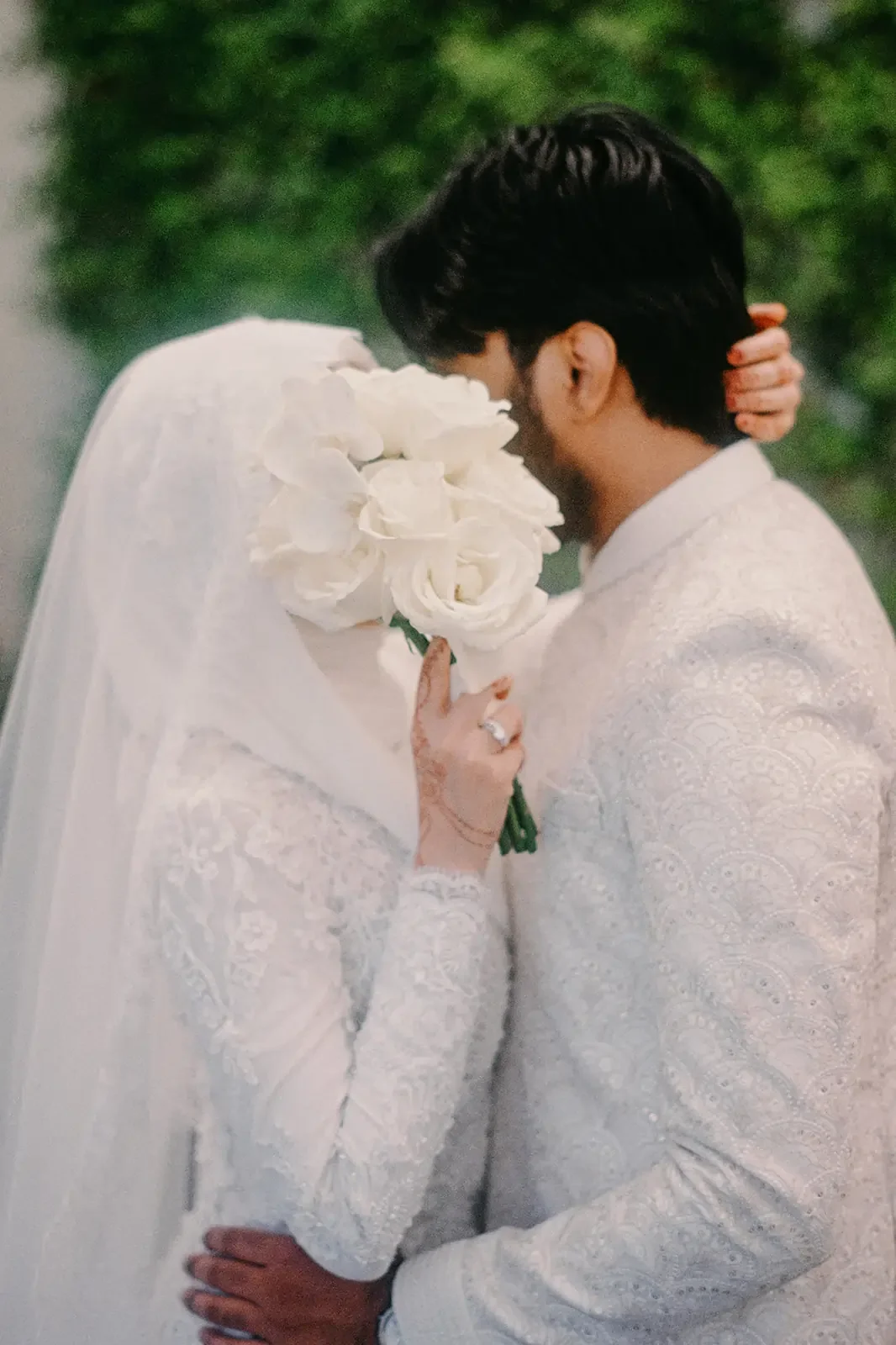
The result is images with a quality that's genuinely different from digital: organic grain, soft highlights that don't blow out, colours that render with warmth and depth, and a sense of texture that digital processing can approximate but never quite replicate.
Why Couples Are Choosing Film Again
It looks different in a way that matters
Digital photography has become extraordinarily good — and, as a result, extraordinarily consistent. Film photographs stand out. They have a specificity of feeling that's hard to describe but immediately recognisable. Many couples find that a handful of film frames mixed into a digital gallery gives the whole collection a warmth and timelessness it wouldn't otherwise have.
It slows things down
A film camera holds 36 exposures per roll. That physical constraint changes how a photographer works — less volume, more intention. Each frame is considered. The results often reflect that deliberateness.
It ages beautifully
Digital images, rendered the same way across devices and decades, can start to feel dated as editing styles change. Film photographs tend to look classic rather than dated — which is part of why images shot on film in the 1970s still feel more timeless than most digital images from 2005.
What Film Photography Looks Like in a Wedding Gallery
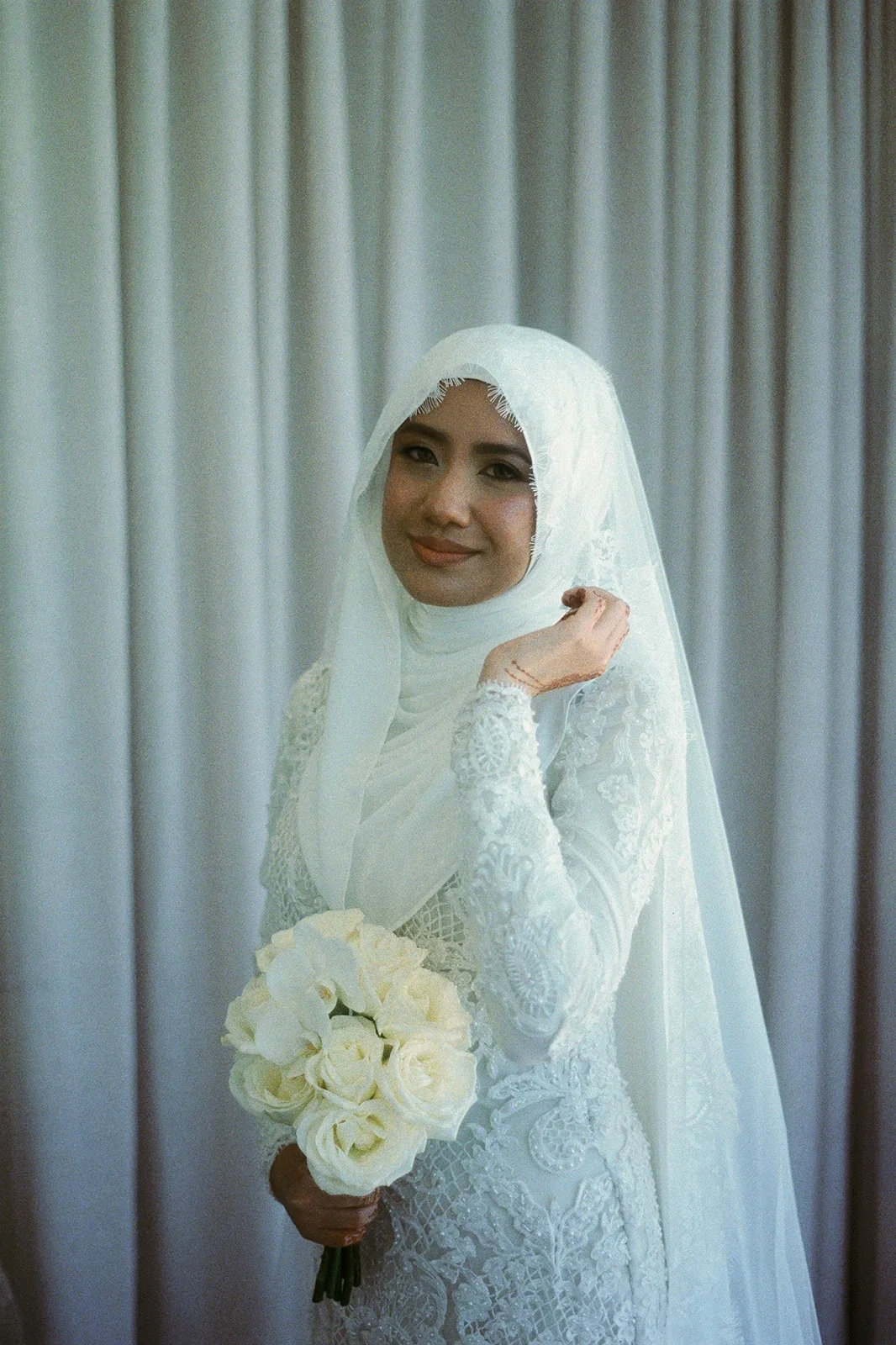
At most weddings where film is included, it's used selectively rather than exclusively — a roll or two during getting ready, during the ceremony, or during portraits. The film frames sit alongside the digital gallery as a distinct, curated layer: quieter, warmer, and textured in a way that makes them immediately distinguishable.
It's worth viewing examples before you decide. Film photography has a very specific aesthetic, and it either resonates with you or it doesn't. Ask to see galleries that include film frames alongside digital images so you can see how they sit together.
Do You Need a Separate Film Photographer?
Not necessarily. Some photographers shoot both digital and film and include analogue frames as part of their standard coverage. At Honey Weddings, film photos are included in our $4,500 Full Day Photo + Video Package — it's not an add-on, it's part of how we work. We believe the two formats complement each other in a way that makes the overall gallery stronger.
Curious About Film?
We're Darlan and Christian, a Melbourne and Adelaide photo and video duo. We'd love to show you what film frames look like alongside digital images from the same wedding. Get in touch with Honey Weddings and we'll walk you through our galleries and how we use film throughout the day.
For more on our editing approach and how we work, read What Should I Ask About a Photographer's Editing Style?
